Azure Integration Services

Microsoft names six products. Which one a problem needs follows from the failure you cannot tolerate, not from the list - and that choice is expensive to reverse.

The list is public, the choice is not

Azure Integration Services is Microsoft's umbrella name for six products that connect systems: Logic Apps, API Management, Service Bus, Event Grid, Data Factory and Azure Functions. Microsoft's own page lists them, and its documentation is good.

What none of it tells you is which one your problem needs, or what that one costs to run once the traffic is real. That decision is usually taken once, early, by whoever is nearest to it, and unpicking it later means rebuilding the integration rather than reconfiguring it.

The useful question is not which component is best. It is what must not be allowed to happen.

What is actually in it

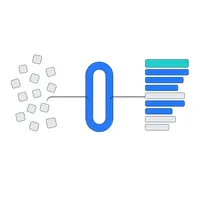
One message, left to right, with each component in the stage where it earns its place. Then the six on their own, and what each is genuinely good at.

  1. It arrives

    • A partner call, an app event, a nightly file
  2. It is admitted

    • APIMAPI ManagementKeys, quotas, versioning
  3. It is moved

    • SBService BusIt must not be lost
    • EGEvent GridMany listeners, one event
  4. It is acted on

    • LALogic AppsA connector already exists
    • FNAzure FunctionsIt needs real code
  5. It lands

    • CRM, finance stack, database, warehouse
ADFData Factory sits outside this path. Bulk and scheduled movement goes straight to the data store, past the message flow entirely - which is the honest answer to where it overlaps with Logic Apps.
  • LALogic Apps

    Workflow orchestration with connectors to most things. Fast to build, and the connector catalogue is why most teams start here. On the Consumption plan the bill follows executions and counts every retry; Standard is priced on its own hosting plan instead.

  • APIMAPI Management

    The front door: keys, quotas, versioning and a developer portal. The tier decision is the one worth taking slowly, because the tiers differ in isolation, SLA and network integration rather than in throughput alone.

  • SBService Bus

    Durable enterprise messaging: queues, topics, dead-lettering, and sessions where messages have to be processed in order. Slower to stand up than a Logic App, and much harder to get wrong later.

  • EGEvent Grid

    Event routing, priced per operation, built for one event reaching many listeners. On push delivery it retries on a schedule and then stops. It is not a durable queue, and using it as one is a common and expensive mistake.

  • ADFData Factory

    Bulk and scheduled data movement. It overlaps with Logic Apps enough to cause arguments, and the split is about volume and shape rather than capability.

  • FNAzure Functions

    Code, triggered by an event, on the hosting plan you choose. This is where transformation, branching and anything the connector catalogue does not cover belong. Durable Functions extend it to orchestrations that are code and still have to survive a restart.

Which one fits which problem

Start from what must not be allowed to happen, and the component usually picks itself.

The problemThe componentWhy
Two SaaS products must stay in stepLALogic AppsThe connector already exists
An order must never be lostSBService BusDurable, with dead-lettering and sessions for order
One event, many listenersEGEvent GridBuilt for fan-out, and priced for it
Partners need controlled access to an APIAPIMAPI ManagementKeys, quotas and versioning without building them
A nightly load of a large datasetADFData FactoryBuilt for volume, not for per-message logic
Real transformation, branching or a calculationFNAzure FunctionsLogic belongs in code that can be tested
A workflow that must survive a restartFNDurable FunctionsOrchestration in code, with state

A production estate usually ends up running several of these together, and that is the healthy outcome rather than a sign of sprawl. The failure is rarely picking the wrong one. It is picking one and then bending it to a second job it was never shaped for - a Logic App carrying complex branching through nested conditions, or a function quietly becoming the orchestrator for everything.

The decisions that cost money later

Four choices that look like configuration at the start and read as architecture a year in.

01

Consumption billing rewards low volume and punishes retries

On the Consumption plan, a Logic App that retries a failing call every thirty seconds bills every attempt. Set the retry policy deliberately, and alert on execution count rather than on failure count alone.

02

API Management tiers do not scale smoothly

The tiers differ in isolation, SLA and network integration, not just in throughput, so moving between them is closer to a re-platforming than to a slider. A tier chosen for a pilot rarely survives the first compliance conversation.

03

Event Grid is not durable in the way people assume

On push delivery it retries on a schedule, then dead-letters if a storage destination is configured and drops the event if one is not. Dead-lettering is off until you turn it on, so the default loses data quietly.

04

Connectors carry lock-in

A workflow built on twenty connectors is portable in theory and not in practice. That can be an acceptable trade. It should be a stated one.

What DBHQ does with this

Azure integration taken through to production: CRMs, finance stacks, databases, SaaS estates and legacy applications that were never designed to talk to each other - along with the Azure migration and data engineering that usually arrive with it. Bounded, scoped and quoted before anything starts.

Two engagements from the delivery record, both as a contract consultant inside the client's own programme:

  • Integration across trading systems

    Integration and data-migration consultant for a global energy-trading firm connecting its trading systems and moving off legacy platforms.

  • Legacy systems into Azure, end to end

    Azure and integration consultant for an infrastructure services group weighed down by manual finance reporting and disconnected legacy systems.

See the work

Where the shape of the integration is already clear, that is a delivery engagement. Where it is not - where the component choice, the volumes or the failure behaviour are genuinely open - a bounded investigation answers those questions first, and it is bought only where that uncertainty prevents a reliable quote. See the production delivery route →

If the estate already exists and the question is whether it will hold, a separate review answers that one: one workload judged against all five Well-Architected pillars, read-only, with a dated readiness recommendation. You keep the launch decision, and remediation is quoted separately. The Azure Well-Architected Review in full →

Questions, answered

How do we know which component to pick?
By the failure you cannot tolerate. If losing a message is unacceptable, that is Service Bus. If a slow partner API must not stall everything behind it, that is a queue and a retry policy rather than a bigger Logic App. The choice follows the failure mode, not the feature list.
Is Azure Functions part of Azure Integration Services?
Yes. Microsoft's product page lists it alongside Logic Apps, API Management, Service Bus, Event Grid and Data Factory. The question is worth asking because a great deal of third-party writing still describes the suite as four services, following Microsoft's original integration whitepaper - and because in a working integration Functions is usually where the transformation and the branching end up.
Can you work with what we already have?
Yes, and it is the usual case. Most of this work is on estates that already exist, part-built and part-documented. An honest assessment of what is there comes before any proposal to change it.
Do we own what you build?
Yes. Code, infrastructure definitions and documentation are yours, in your own repositories, from the first commit.
What access do you need?
For an assessment, read-only is enough - resource inventory, configuration and the platform's own signals. Write access is scoped to the agreed work and agreed in advance.
What does it cost?
A fixed fee for a bounded piece of work, quoted after a short call, or agreed days where that fits the shape of the work better. Scope, price and acceptance criteria are agreed in writing before work starts.

An independent view of Microsoft's Azure Integration Services. DBHQ is not affiliated with, endorsed by, or certified by Microsoft. Product names, tiers and billing models are Microsoft's and they change - check the current documentation before committing to a design.

Not sure which component the problem needs?

Describe what has to connect to what, the volumes involved and the failure you cannot tolerate. You will get a straight answer on which component fits and whether the work is ready to quote.

I reply within 24 hours